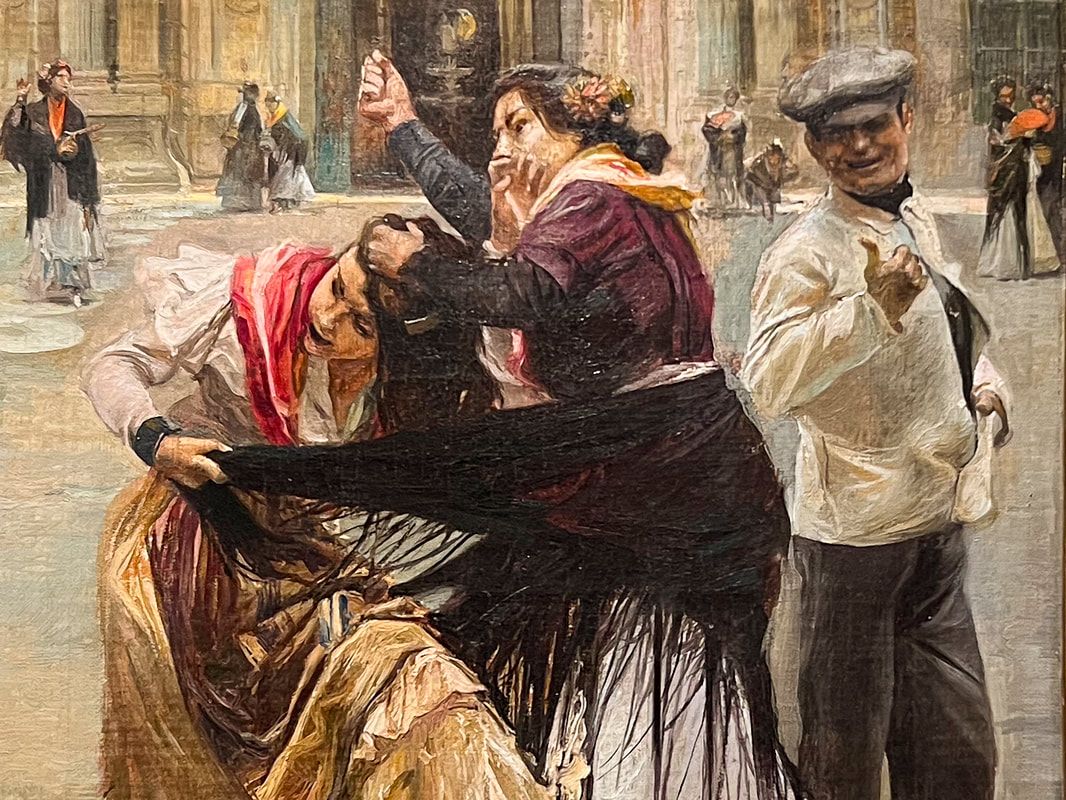
A few days ago, I found myself gazing nostalgically at a painting of two brawling women.
“Remember that night …?” I said to Rich. He was already nodding.
Many years ago, we were standing in a tiny Seville bar when a fight broke out between two neighborhood matrons. The free and frank exchange of views grew increasingly personal and physical, escalating to shouts and shoves. It never quite reached the hair-pulling stage, but eventually one woman stumbled out the door, flushed and disheveled, while the victor swaggered back triumphantly to finish her beer. It was the first time I’d ever seen an actual bar fight in real life. I know, you’re right, I have got to get out more.
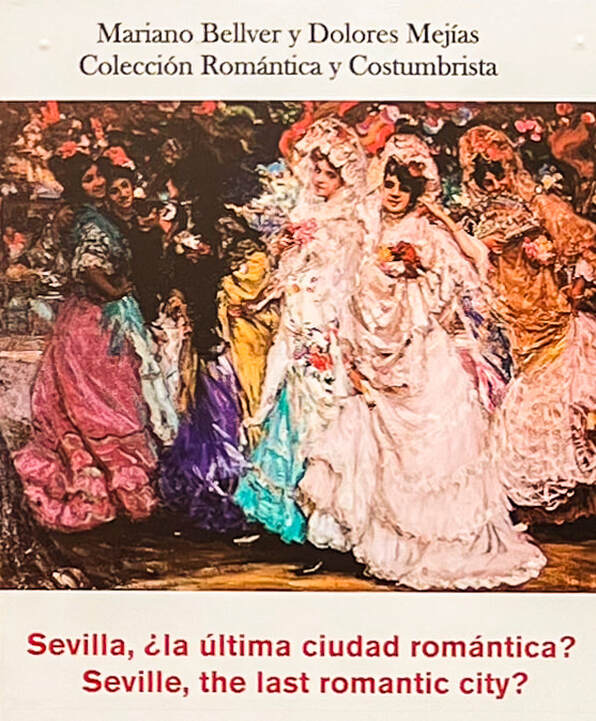
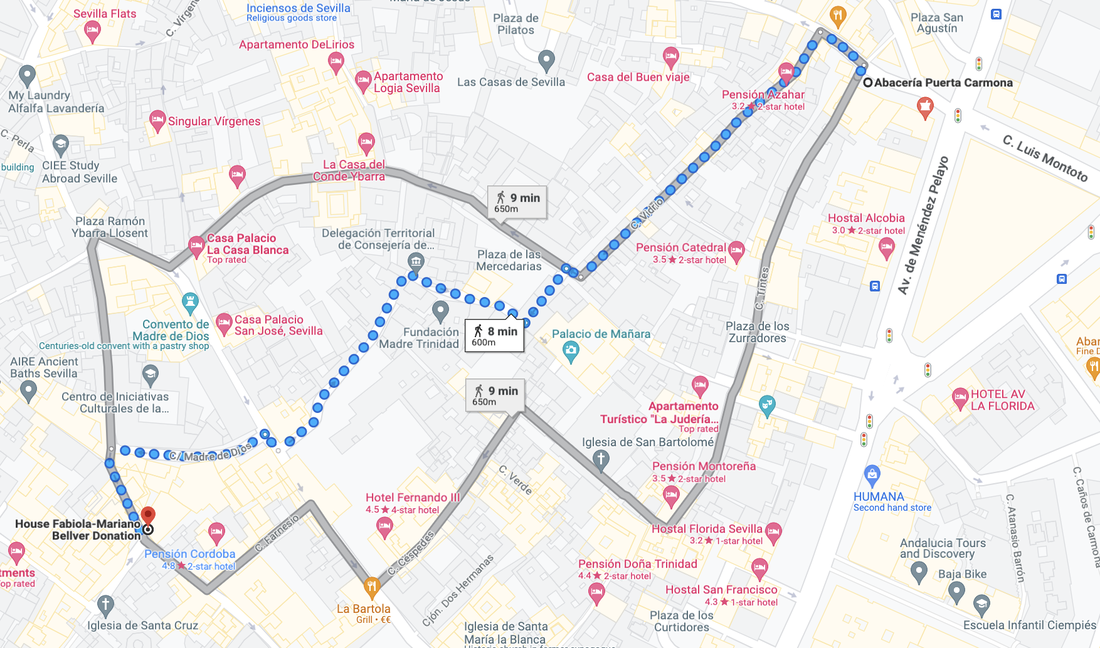
The painting that prompted this trip into memory’s barroom hung in an unfamiliar museum I’d stumbled upon while taking a short cut through back streets near the cathedral. I’d have missed it altogether except for the giant poster by the door that said, “Seville, the last romantic city?”
“Seriously?” I said. “Yes, this city is romantic. But what about Paris? Italy? Zagreb, where we danced summer nights away beneath the stars?” I peered more closely at the building. “What is this place?”
I soon discovered it was a museum saddled with the unfortunate, designed-by-committee name of
Mariano Bellver and Dolores Mejías Romantic and Traditionalist Collection at Fabiola House
. (For short, it’s the Bellver Museum or Casa Fabiola or some configuration involving the words Bellver Collection and Casa Fabiola. You see why it pays to hire professional copywriters in these situations.)
Grandson of a famous sculptor whose works include the cathedral’s 1885 Assumption portal, Bellver spent a lifetime collecting art which he gifted to the city in 2016. Two years later the museum opened, only to shut down in 2022 following a construction disaster. It seems the next-door neighbor had commissioned renovations involving the overenthusiastic application of a pneumatic drill, which cracked the common walls and sent priceless art tumbling to the floor.
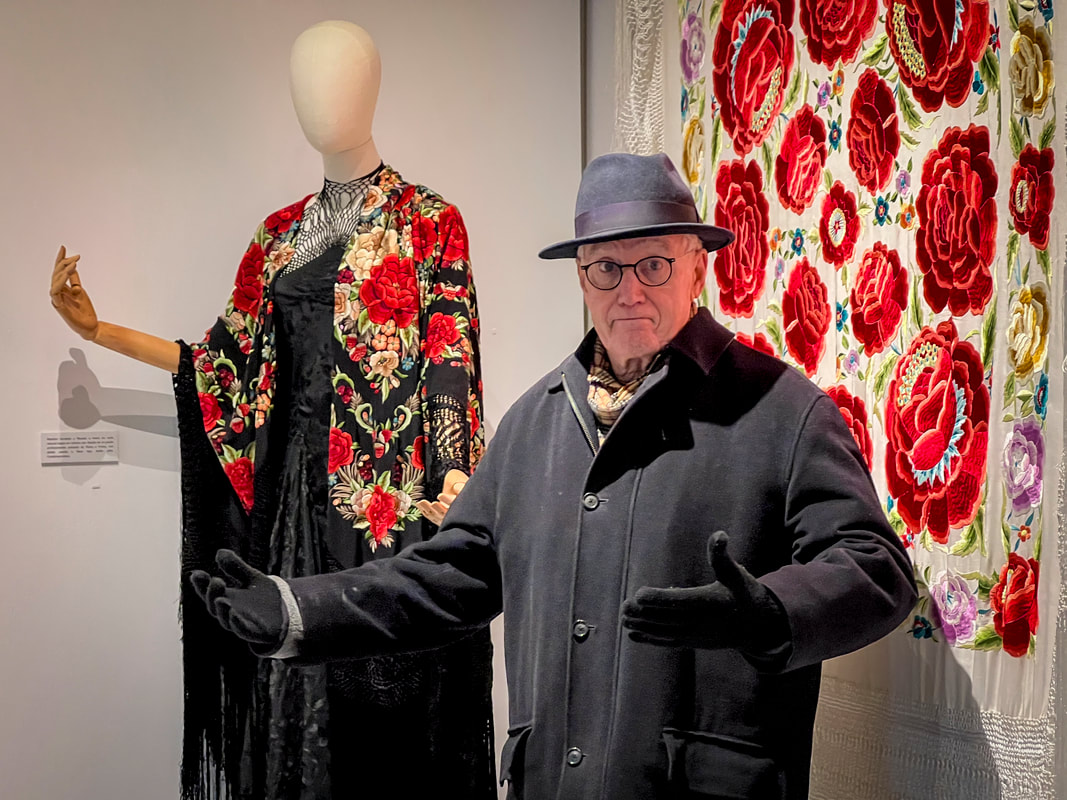
Rich and I decided to go in and see what was left of the collection. I was instantly charmed by the fourteenth-century palace, renovated many times by various owners, and by the warmhearted paintings of daily life in nineteenth-century Seville.
Many of the subjects looked impossibly quaint — a dispute at knifepoint over a card game, carriages in front of city gates long since demolished to smooth the flow of automobile traffic, the
Feria de Abril
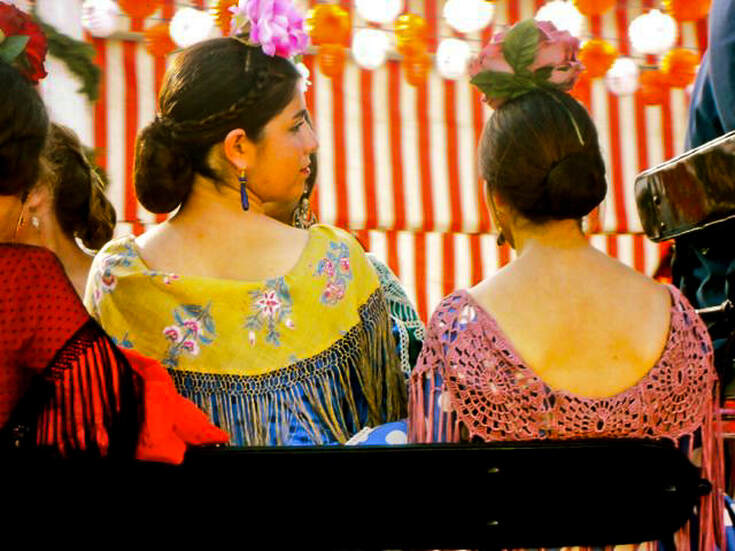
(April Fair) in the days before it was attended by five million people a year, generating annual revenues of $1 billion. But in this deeply traditional city, many elements — such as Feria outfits — were instantly recognizable and nearly identical to the way we dress for the occasion now.
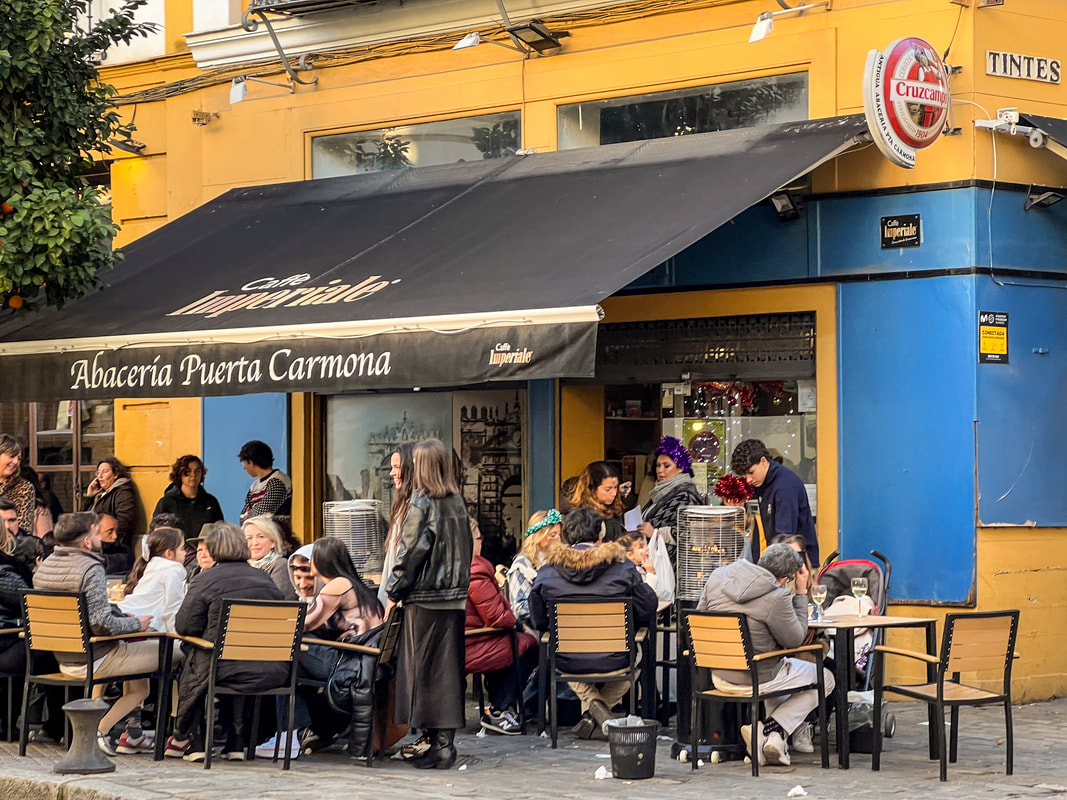
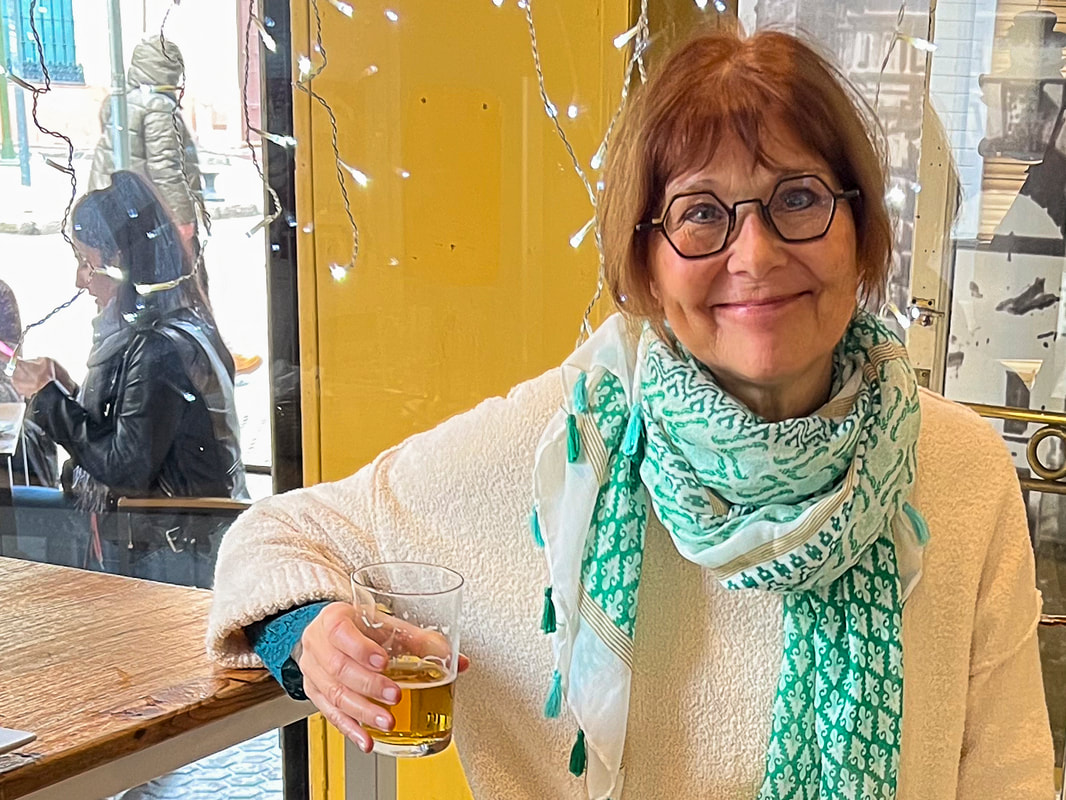
The nostalgic mood inspired by these paintings prompted us to head over to the place Rich and I always call “The First Bar.” More than two decades ago, newly arrived for our first extended stay in Seville, we’d wandered out of our rental apartment and fetched up in this modest, traditional tapas bar.
I remember standing at the counter’s glass case to see what was on offer, as I didn’t yet have the vocabulary to read a menu. Being vegetarian at the time, I pointed to
boquerones en vinagre
(anchovies in vinegar) and
espinacas con garbanzos
(spinach with chickpeas). The very air seemed to sparkle with the sizzling excitement of being there at last.
I still feel that way about this city.
Of course, it’s changed enormously over the decades. Word of its charm has gotten out and the streets are thronged with tourists nearly all year round. Crumbling old buildings have been renovated and converted to smart new hotels or Airbnbs. Monuments such as the Alcázar palace and the cathedral, where I once could wander in and out freely, now require advance reservations, and hours-long lines are the norm. Happily, the quality of the food has improved tremendously just about everywhere, including The First Bar.
Having sustained many changes in ownership, The First Bar is currently called the
Abacería Puerta Carmona
, meaning the butcher shop of the long-gone city gate that once gave access to the road leading to Carmona. The
abacería
is painted in brighter colors now, and the menu is more extensive but still sticks to the classics.
We ordered
tomate con melva
, thinly sliced tomato topped with mackerel, and a truly outstanding
solomillo al whisky
, pork sirloin with a garlicky whisky-soaked sauce. This whisky sauce burst on Andalucía’s culinary scene in the 1970s, supposedly a desperation substitute when a cook ran out of wine. But that seems unlikely; I’ve never seen a Sevillano run short of wine on any occasion.
As we sat in The First Bar enjoying our
solomillo al whisky
, Rich and I talked about all the changes we’d seen here over the years. To us, Seville is still the most romantic city we know, and it’s hard not to mourn all the good bits that are slipping away.
But change is necessary and healthy; it keeps historic cities from becoming fossilized into theme parks. And if the expat life teaches us anything, it’s how to deal with loss. We miss so many people back home, and expats friends here have a dismaying tendency to depart unexpectedly for old haunts or new adventures. It’s the price we pay for a vivid life. Is it worth it? Oh, yes, I think so.
I recently ran across this lovely quote from author
Brianna Wiest
, summing up the cost and value of change. Whether our transitions come from geography, age, jobs, relationships, or other circumstances, her words apply to all of us, sooner or later.
“Your new life is going to cost you your old one.
It’s going to cost you your comfort zone and your sense
of direction.
It’s going to cost you relationships and friends.
It’s going to cost you being liked and understood.
It doesn’t matter.
The people who are meant for you are going to meet you
on the other side. You’re going to build a new comfort
zone around the things that actually move you forward.
Instead of being liked, you’re going to be loved. Instead of
being understood, you’re going to be seen.
All you’re going to lose is what was built for a person you
no longer are.”
Is Seville the world’s last romantic city? No; there are certainly many others out there. Seville’s gift is bringing its own special vibrancy to the time we spend with people we love and, if we’re lucky, enabling us to rub shoulders with Sevillanos who know how to enjoy the small pleasures of daily life.
During my year-end break, I was considering how I could best help visitors embrace the city’s culture, and as is so often the case, my thoughts turned to food. I decided to start compiling my own personal guide to the city’s most endearing eateries. If you’re visiting Seville this year, or just love drooling over pictures and descriptions of great meals, check it out.
Cozy Places to Eat in Seville
Romantic Restaurants
Tapas Bars and Casual Dining
Cocktail Bars
Breakfast
Sweet Indulgences
Out to Lunch
This story is part of my ongoing series “Out to Lunch” about visiting offbeat places in the city and province of Seville, often by train, seeking cultural curiosities and great eats. (
Learn more
.)
Want to Stay in the Loop?
If you haven’t already, take a moment to subscribe so you’ll receive notices when I publish my weekly posts.
Just send me an email and I’ll take it from there.
[email protected]
Be sure to check out my
best selling travel memoirs & guide books
here
.
Planning a Trip?
Enter any destination or topic, such as packing light or road food, in
the search box
below
. If I’ve written about it, you’ll find it
Leave a Reply