The news that
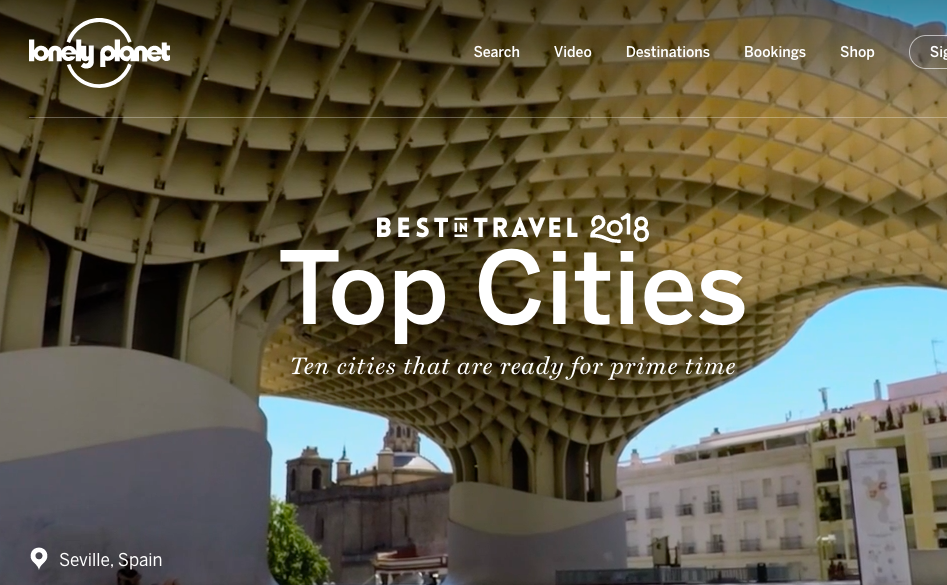
Lonely Planet designated Seville as the #1 Travel Destination of 2018
sent shockwaves through the expat community here.
On the one hand, it justifies what we’ve been telling skeptical family and friends for years: this is one of the most delightful places in the world. On the other hand, we’re just a teeny bit panicked at the idea that yet more visitors will be heading our way.
When Rich and I first moved here more than a dozen years ago, Seville was a sleepy touristic backwater, one of those also-ran places that got scratched off everyone’s destinations-to-consider list in favor of fashionable spots like Maui and Morocco. Today our city gets 11 million visitors a year. And while we’re delighted that the flagging economy is getting a much-needed shot in the arm, we’re a bit aghast at the massive tour groups clogging sidewalks, overrunning restaurants, and driving up prices. And it’s about to get much, much worse thanks to Lonely Planet.
So my advice to you is this: If Seville is on your vacation-there-someday checklist, visit in January, February, or early March.
When we first discovered Seville, Rich and I came here every February to escape the snow belt of Cleveland, a city that gets just 69 days of full sun a year, not one of which occurs between New Year’s and Easter. While our neighbors were busy shoveling a path to the car and scraping ice off their windshields, we were sitting at sunny sidewalk tables sipping espresso and watching the world stroll by. One of the beauties of Seville’s climate is that the mild winters — a trifle too cool for serious sunbathing, entirely too warm to produce any snow for sports — offer the kind of unremarkable weather that doesn’t demand excessive activity from anyone.
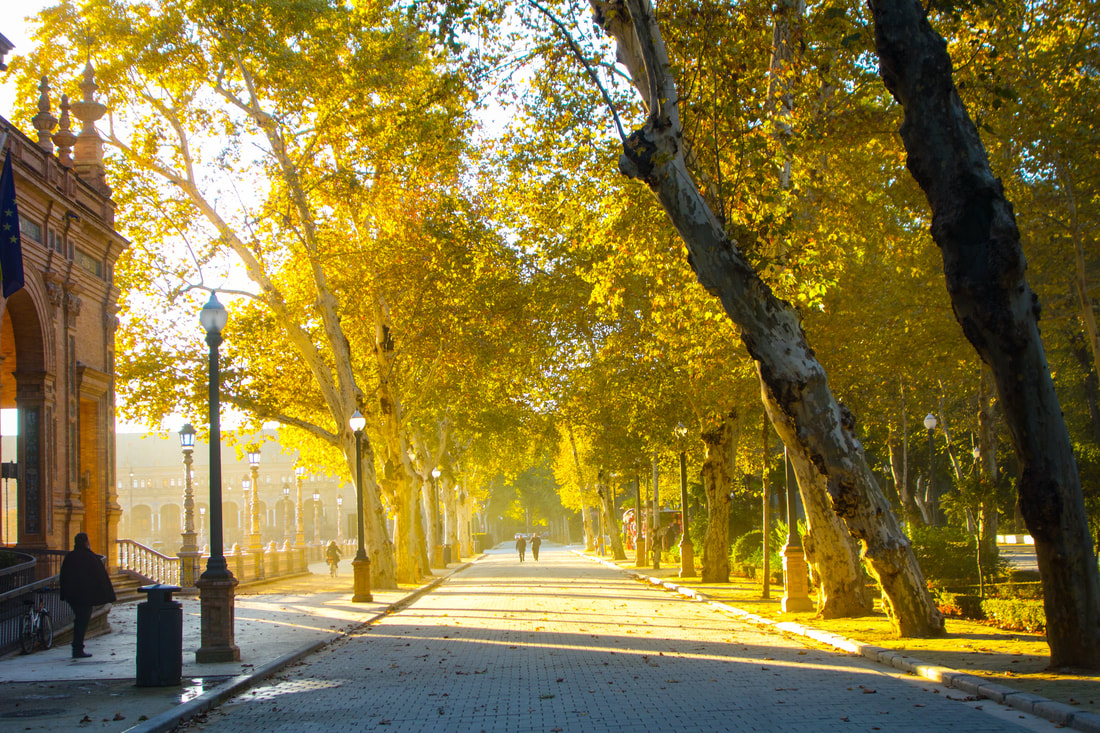
Like any city, Seville has seen many changes in the last dozen years, but it hasn’t lost its two-thousand-year-old capacity for charming the socks off people. (Yes, I know, technically people didn’t wear socks 2000 years ago. But somehow “charming the togas” off people didn’t sound quite right either.) The city continues to enchant visitors with its magnificent Moorish palaces and gardens, vibrant street life, and pitchers of sangria for less than you’d pay for a glass of chardonnay back home.
Arriving in winter or early spring, you’ll avoid the teeming hordes and inflated prices of the high season, which peaks during Semana Santa (Holy Week, March 25 to April 1 in 2018) and the Feria de Abril (April Fair, held this year April 15 to 22). You won’t find the frenzied atmosphere of vacation hotspots devoted to winter sports or spring break at the beach. And you’ll be just in time to enjoy the exploding new foodie scene that has transformed local dining into a world-class pleasure.
Best of all, you’ll find the city breathing a collective sigh of relief and settling down to enjoy itself in the just-us atmosphere that prevails between the bustling holiday season and the spring festivals. Sidewalk cafés are still packed, but instead of tourists, you’ll find crowds of Sevillanos doing what they do best: enjoying themselves. People in this city devote the same energy and attention to their social lives that Americans expend on their careers. Finding time for family and friends isn’t pushed into the margins of life, it’s a top priority every single day. It’s downright inspiring.
When we first arrived in Seville and were living in a cramped tourist apartment near the cathedral, Rich and I used to lie in bed at night listening to the hum of voices rising from the café-bars that lined our street. At first I desperately wished that everyone would go home and let me sleep in peace. But I gradually got used to it, then began to find it deeply soothing, a kind of cheery white noise that reminded me that for tonight, at least, all was well with the world outside my doorstep. And that, perhaps, is the best thing that Seville can offer us. Having weathered thousands of years of astounding triumphs and crushing defeats, the city has learned to focus on what truly matters: spending time with the people we love, enjoying small pleasures, and doing our bit to add to the joyful noise of the world.
Want to Know More About Seville?
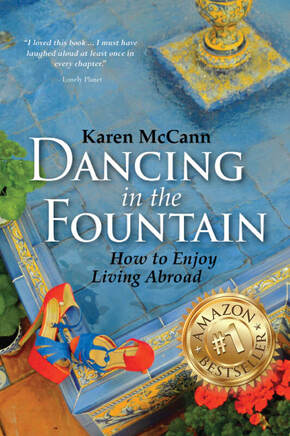
This is the story of how Rich and I fell in love with Seville, began exploring its quirkier byways, and keep re-discovering its charms.
“I loved this book,”
Lonely Planet
wrote about
Dancing in the Fountain
. “
I must have laughed aloud at least once in every chapter
… The advice in the book is terrific.”
“A delightfully well-written true-life adventure story
,” says New York Times bestselling author Chris Brady. “McCann’s writing is
inviting, immediately charming, and constantly entertaining
.”
Dancing in the Fountain
takes its title from one very hot night when Rich and I were sitting on the edge of a big stone fountain near our Seville apartment. Dabbling our feet in the cool water, pretty soon we were wading, then waltzing in the fountain. An old Spaniard passing by growled,
“Hey you two, is that any way to behave? You wouldn’t do that back where you come from.”
And that’s the whole point. Traveling and living overseas, you get to try things you’d never do in the old country.
Look inside “Dancing” on Amazon
Subscribe to my travel blog here
Leave a Reply