
Last Saturday, I had the astonishing good fortune to meet
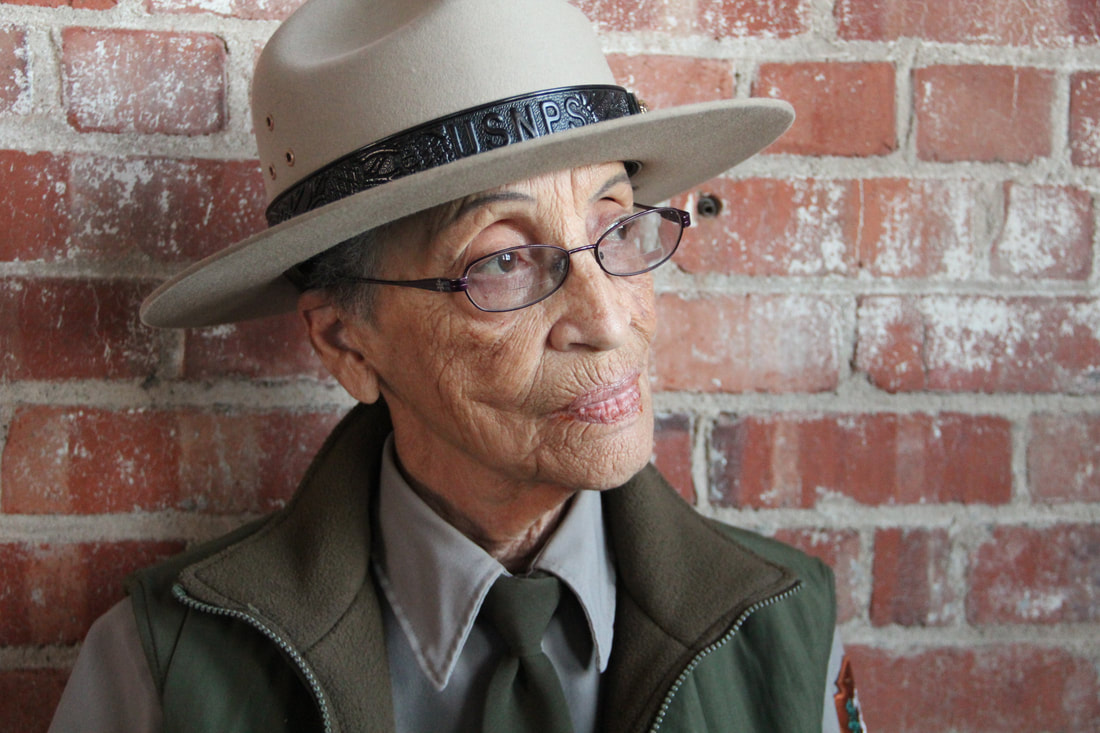
Betty Soskin
, one of the original “Rosie the Riveters,” women who took on “men’s work” in the nation’s factories and shipyards during World War II. At 95, Betty is America’s oldest park ranger, and she takes pride in sharing her story, giving frequent talks at the
Rosie the Riveter/WWII Home Front National Historical Park
in Richmond, California. Those talks are nothing short of … OK, I’ll say it:
riveting
.
It didn’t take her long to convince me that just about everything I “knew” about Rosie the Riveter was a myth. And that the truth is far more interesting.
After her talk (which I’ll be getting back to in just a moment) I went home and looked up Rosie’s origins. It all began with a song released in 1942. The snappy tune and distinctive machine-like riff — “Rosie, brrrrrrrr, the Riveter” — made it an instant hit.
So who
was
Rosie? The face the public knew best belonged to
Rose Will Monroe
, a riveter at the Willow Run Aircraft Factory in Ypsilanti, Michigan, who starred in a promotional film about the home front. But for most of us, the face of Rosie will forever be the iconic
“We Can Do It!”
poster. I had always vaguely assumed this poster was thumb-tacked to the wall of every US recruitment office and welding station during the war years. Not so! The poster was privately printed by Westinghouse Electric as part of a series designed to boost productivity and discourage labor unrest. It was displayed in their factories for a mere two weeks in February, 1943.
After that, the poster languished in obscurity until 1982, when it appeared in a Washington Post article on patriotic art and was instantly embraced by the feminist movement as a symbol of empowerment. Which is ironic considering the “Rosies” made half as much as men doing the same job. Less if you weren’t white.
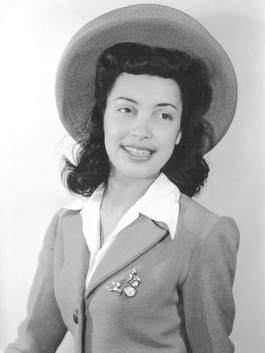
Betty in 1942, at age 20, shortly before her first marriage.
Betty discussed none of this in her presentation. Her experience as an African American worker was radically different from the media’s Rosie image.
“That was a white woman’s story,” she said. “I was a twenty-year-old clerk working in a Jim Crow segregated union hall.” The popular images of happy, mixed-race work crews were, she said, far from the truth, especially at the beginning. Overt prejudice and discrimination were rampant, prompting African Americans to advocate for the Double V — victory for democracy at home
and
abroad — and inspiring poet
Langston Hughes
to write, “How long I got to fight / BOTH HITLER AND JIM CROW?”
Integration was the last thing on the mind of
Henry Kaiser,
the industrialist who created the Richmond Shipyards where Betty worked. He was so nautically inexperienced that he referred to a ship’s bow as “the pointy end,” but he figured he could build Liberty ships faster than anyone else using Henry Ford’s assembly line methods —
if
he could get enough labor. “Henry Kaiser just wanted hands,” Betty recalled. “He didn’t care what color they were or who they were attached to.” His recruiters headed south, hiring white farmers impoverished by the Dust Bowl and blacks thrown out of work by newly mechanized cotton farms. Some 98,000 black and white Southerners arrived in Richmond, bringing with them deep-seated racial friction.
“And because they’re all living under the threat of fascist world domination,” Betty explained, “there’s no time to take on a broken social system. No time to do anything except take on the mission of their leader, which is pure and simple: build ships faster than the enemy can sink ‘em. And together they completed 747 ships in 3 years and 8 months. They helped to turn the course of the war around by out-producing the enemy. And in the process, they accelerated the rate of social change, so that to this day it still radiates out of the Bay Area into the rest of the nation. It’s where the visionaries come to find constituents for their wildest dreams. Because of what happened right here. That’s rather amazing.”
Betty grew up around her great grandmother, a former slave, and became the first person in her family to hold a white-collar job. She’s outlived two husbands, one of whom was her partner in a recording company specializing in gospel music, the other a professor of psychology at the University of California, Berkeley. After raising four kids, she worked as a field representative for two California State Assemblywomen. I was delighted to discover her autobiography is due out in the fall — and yes, I will be sure to let you all know when it’s published!
After her talk, I asked Betty what she thought about our country’s future. “We are in a time of chaos,” she told me. “We’ve been getting those since — oh, about 1776. We’re like a spiral that keeps going around and touching the same places again and again. In times of chaos, we touch the reset button on democracy. Right now we are re-defining what democracy is. Again. Only today, there are more of us who have a voice in determining how we are going to change as a nation.”
And that’s about the most hopeful and comforting perspective I’ve heard in a while. Thanks, Betty!
Would you like to know more?
Watch a tape of Betty’s talk here.
Learn more about the Rosie the Riveter museum/park here.
Subscribe to my blog here
GOING TO SPAIN? HERE’S WHAT HAPPENED TO ME THERE
VISITING EASTERN EUROPE? HERE’S WHAT I LEARNED THERE
TRAVELING ? HERE’S HOW TO CARRY LESS, ENJOY MORE
See my books on Amazon

Leave a Reply