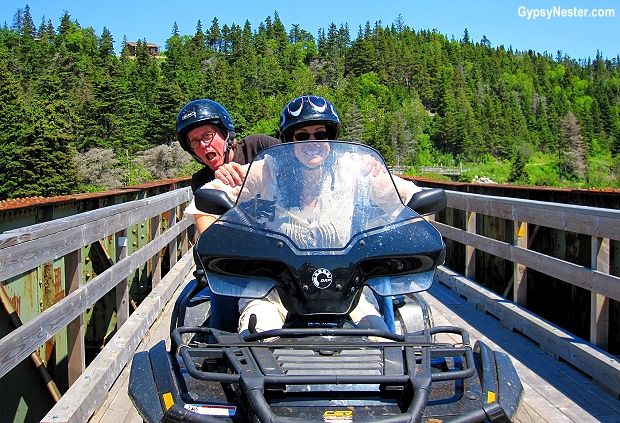



With kids in college and slender savings from their careers (she was a web designer, he was a musician), Veronica and David couldn’t afford globetrotting in grand style. “When we first set out,” David recalled, “we were in a 1983 Chevy motor home that we found on eBay for $3,200. Obviously we were doing things as cheaply as possible. After our first year we figured up our costs and found that we weren’t spending any more than we did when we were keeping up a house. Over the years we have found ways to [finance our] travel by writing freelance travel pieces and with our website,
GypsyNester.com
.” This year they published their first book,
Going Gypsy: One Couple’s Adventure from Empty Nest to No Nest at All
.
Inevitably the discussion turned to losses and gains. “None of the things that we have given up are permanent,” David pointed out. “We can always go back to a settled life, if we choose.
What we have gained is permanent
though. We will always have the memories of all of the amazing places we have seen, all of the history we have learned, and the experiences of a lifetime.”
A classic case of culoinquieto
Like most Americans, I was raised on stories about people pulling up stakes and heading off into the unknown: my great-great-grandparents crossing the Atlantic, my great-grandparents going west by covered wagon.
Itchy feet seem to be in our DNA
; by the time I left for college, I’d lived in seven homes in three states. Today, I’m hard pressed to think of an American family that isn’t scattered across half the continent, if not half the globe. The Spanish refer to this as having a
culoinquieto
, literally a restless backside, conjuring images of schoolboys squirming in their chairs, longing to be elsewhere on a fine day.
While many Americans have a touch of
culoinquieto,
few have
incorporated it into their lives as enthusiastically as Veronica and David James. Hitting the road in their forties, they’ve logged more than 10,000 miles on America’s back roads and more recently have found themselves in Europe, Asia, and beyond. I recently asked them what precipitated their odyssey.
“Like most couples,” Veronica told me, “
we had a big ‘now what?’ moment when our last child was ready to fly the nest
. Ours came in 2008 when we were living on the island of St. Croix in the U.S. Virgin Islands. With all the kids gone, we thought it was a good time to go back up to the States and reconnect with family and friends. Our original idea was to take about a year — a victory lap of sorts. After seeing everyone, we had another ‘now what?!’ moment and decided that we liked our new lifestyle and wanted to keep traveling.”
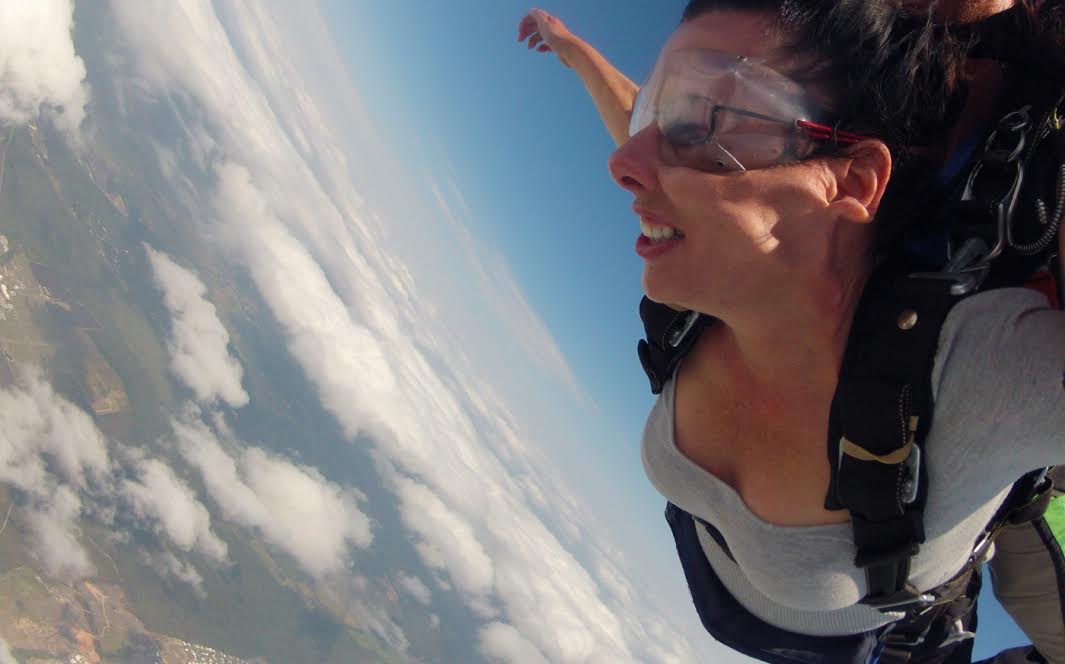
Seeking once-in-a-lifetime experiences, the two have eaten silkworms in China, kayaked with humpbacked whales in Newfoundland, and gone skydiving in Australia. “Once I conquered that first fear of leaving home,” Veronica told me, “
I have actively sought out ways to face my fears head on
. I find that writing about jumping out of an airplane, zip lining, and regular, everyday fears helps a lot, too. My biggest fears (and ones I will always will refuse to participate in) are karaoke and bungee jumping. “ I’m with you all the way on those two, Veronica!
As Veronica and David’s story reminds us, when we set out in search of adventure what we really discover is ourselves. All journeys are inner journeys. The excitement of exploration lets us shed our ordinary preoccupations long enough to feel the rapture of being alive.
“Travel is like love,” says author
Pico Iyer,
“mostly because it’s a heightened state of awareness, in which we are mindful, receptive, undimmed by familiarity, and ready to be transformed. That is why the best trips, like the best love affairs, never really end.”
YOU MIGHT ALSO ENJOY
EXTENDED TRAVEL: A TOTALLY UNSCIENTIFIC COST-BENEFIT ANALYSIS
BOOKS THAT INSPIRE OUR TRAVELS
HOW TO CELEBRATE BIRTHDAYS ON THE ROAD
Leave a Reply