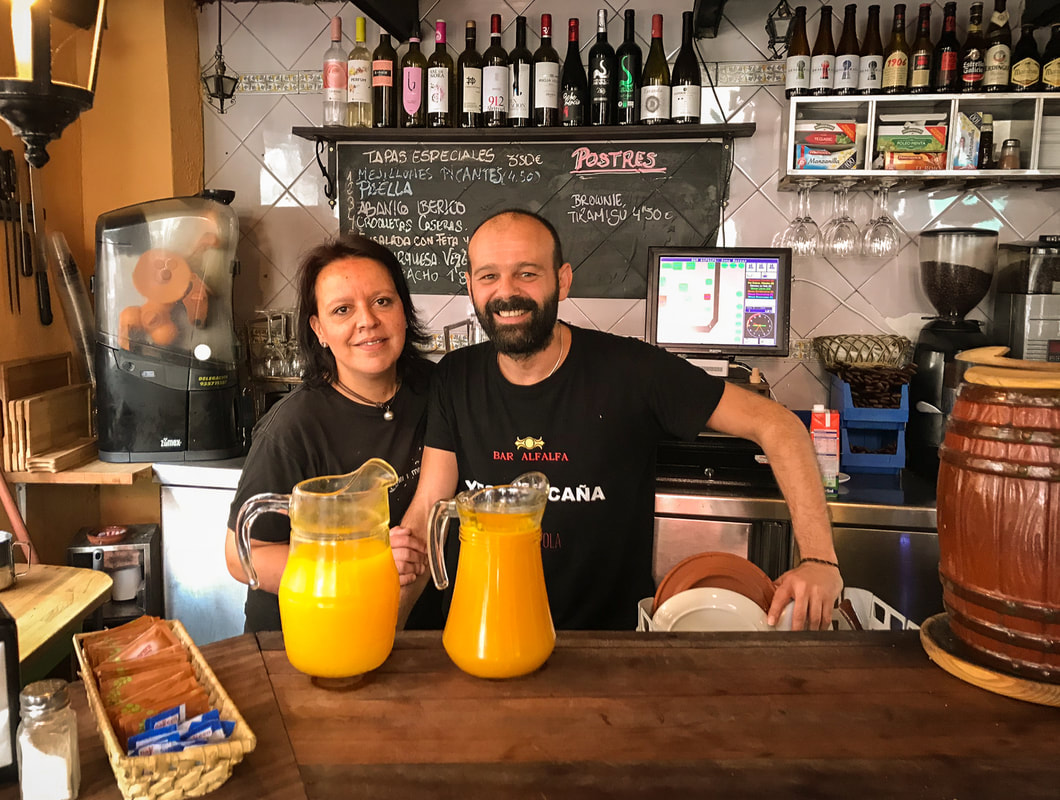
The idea that “breakfast is the most important meal of the day” was invented by 19th century cereal manufacturers, most probably John Harvey Kellogg, a religious zealot who believed eating breakfast cereal would make Americans strong enough to stop thinking about sex. (It didn’t. Go figure.) The Spanish, who have no such Puritan goals, enjoy their version of breakfast so much they indulge in it twice every morning, with great enthusiasm.
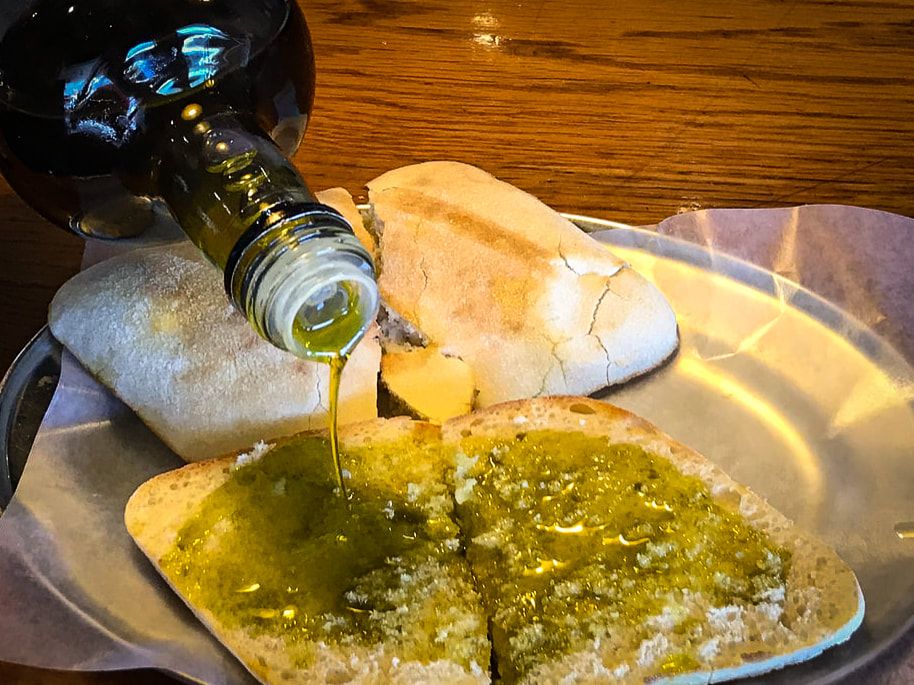
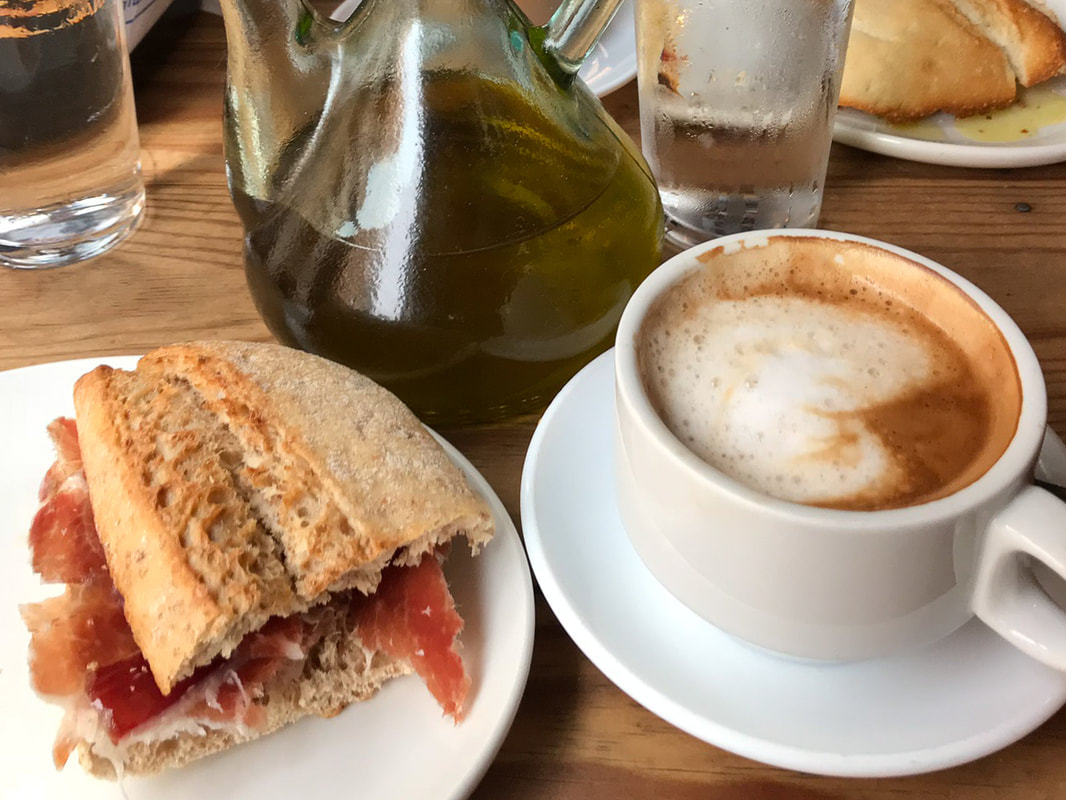
At home, Sevillanos typically start the day with a first
desayuno
of coffee and toast topped with olive oil and ham or butter and jam. They then head to their workplace and put in an hour or two of labor, after which they’ll refresh themselves with a midmorning break at a nearby café, enjoying another round of coffee and toast to fortify themselves until lunch.
To accommodate the second-breakfast habit, the city has café-bars on practically every block. Some are grand, an increasing number are corporate efforts, and the hipsters outdo one another in providing quirky environments, flat whites, and wifi workspaces. But the mainstay continues to be modest little neighborhood places you wouldn’t look at twice in the US. To American eyes, inexpensive furnishings suggest substandard coffee and cheap food, but that’s not the case in Seville.
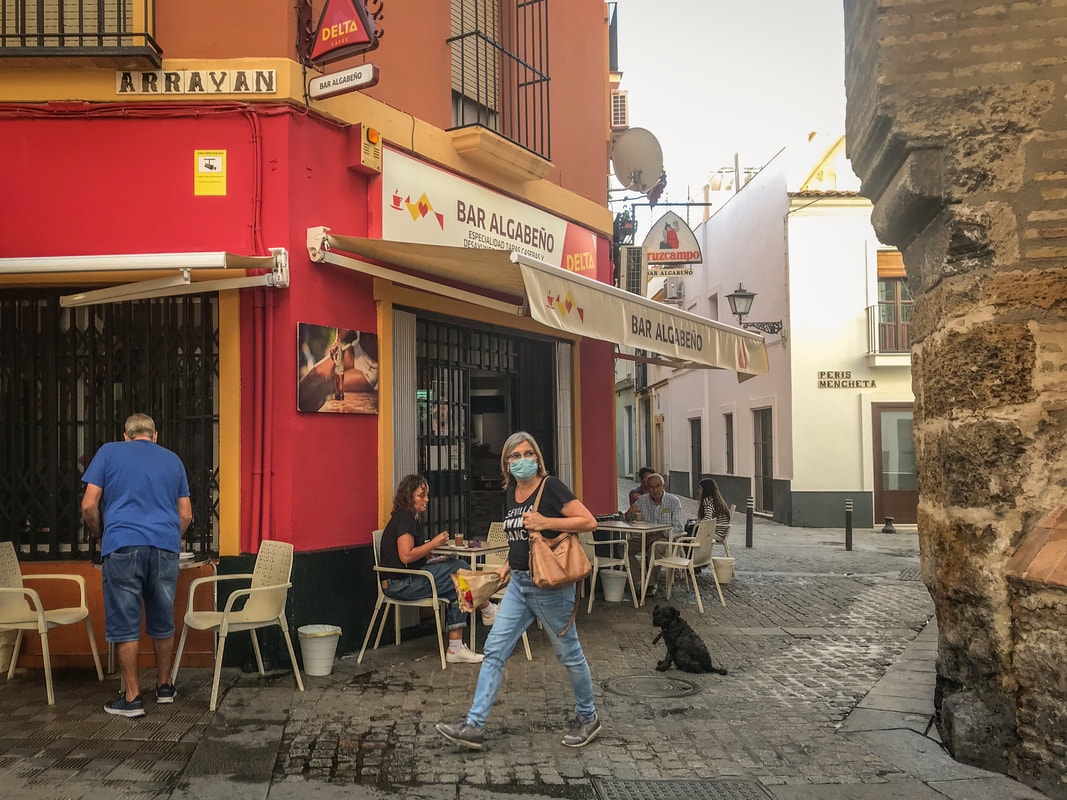
The other morning we tried the
Bar Algabeño
, tucked between the
Feria Market
and the 15th century palace of the Guzmanes of La Algaba (now municipal offices and a museum). We found the Algabeño’s coffee and toast delicious, and the back alley location (which in the US would be another red flag) makes it a great place to watch locals going about their day.
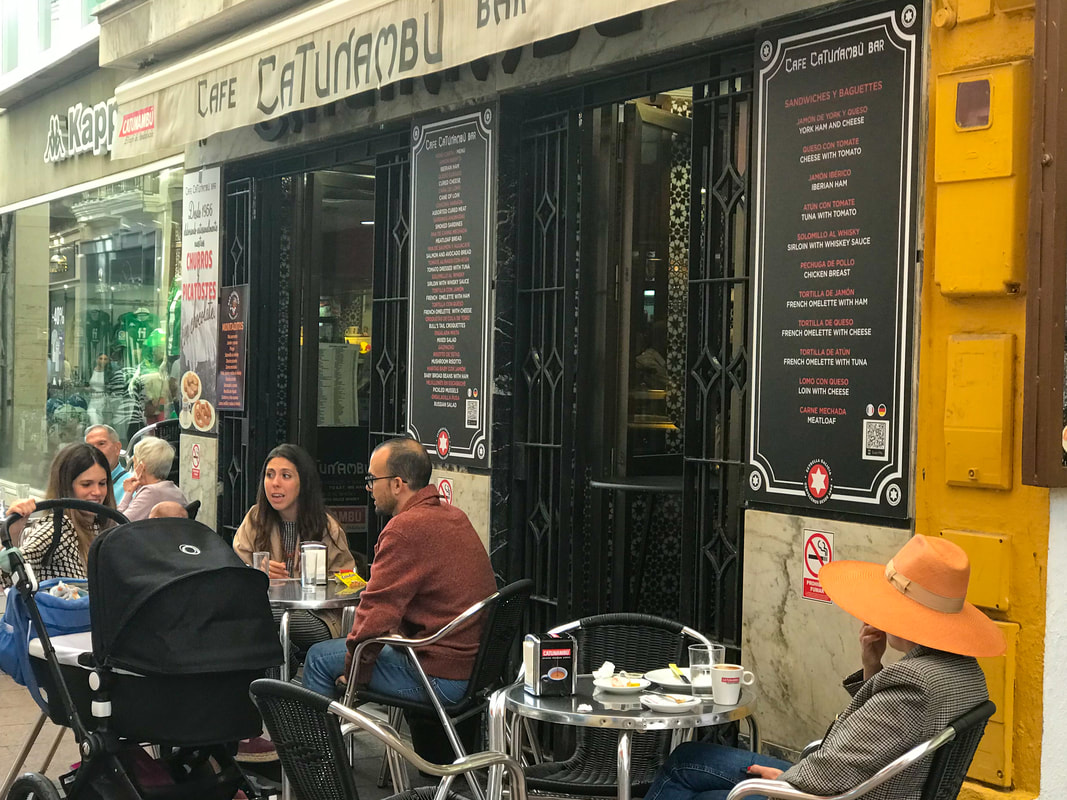
The
Catunambu,
on the bustling shopping street Calle Sierpes, couldn’t be more visible, yet many Americans bypass it for the nearby Starbucks. So you’ll mostly find Spaniards at the Catunambu, taking a leisurely second breakfast to restore themselves after the rigors of a shopping spree. In the photo below, the individual in the big orange hat is almost certainly a foreigner, as local women never wear hats in town unless dressed to the nines for a fancy wedding, and Sevillano guys, if they wear hats at all, stick to Panamas.
So what’s everybody ordering for their second breakfast?
The choices may be simple, but to get it right requires a fair amount of vocabulary. In Seville, you always order your drink first. The classic is
café con leche
, half espresso and half steamed milk. Too much milk? Try a
cortado
, a shot of espresso with half as much milk. Need even more of an eye-opener? Ask for a
café solo
, a straight shot of espresso
.
Prefer something lower octane?
Café Americano
is plain black coffee, and
leche manchada
(literally “stained milk”) is half an inch of espresso and plenty of milk.
I’ve never seen low-fat milk here, but hipster and tourist coffee houses may offer milk alternatives. However, no one will understand a request for “
leche de soya
” (soy milk), “
leche de avena
” (oat milk), or the like because everyone knows milk is produced by lactating mammals, not plants. The barrista will be dumfounded by your ignorance but too polite to say so. Ask for
bebida de soya
(soy drink) or
bebida de avena
(oat drink) instead.
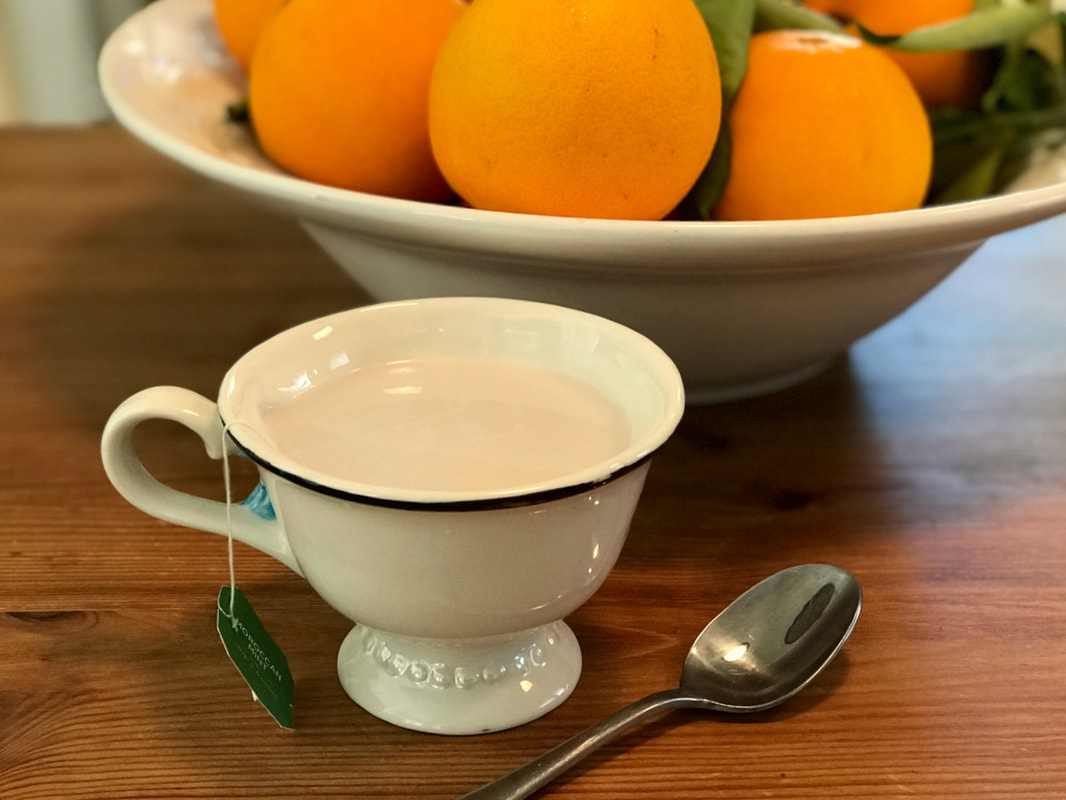
It’s even more complicated if, like me, you happen to like tea with milk, which is unheard of here. Ask for
té con leche
(tea with milk) and you’ll be served a glass of steamed milk with a tea bag in it. If you ask for
té con leche aparte
(tea with milk apart or on the side) they’ll bring you tea but not the milk, assuming you’ll drink that later in the meal or want it left in the kitchen for esoteric reasons known only to mad foreigners.
Té con leche aparte para añadir
(tea with milk apart to add in) should do the trick, although you may have to repeat it several times to be understood. You can see why I gave up and switched to
café con leche
.
As for food, toast is such a given you don’t even have to say
tostada
; you simply order a
media
(half a small baguette) or
entera
(entire baguette) and name your toppings. The most common are
jamón
(thin slivers of Spanish ham),
tomate
(tomato) which can be ordered with or without the ham, and
mantequilla y mermelada
(butter and jam). If you want heartier or more familiar fare, such as eggs, avocado toast, or corn flakes, you may find them in places that cater to out-of-town visitors, but you won’t see a lot of Sevillanos eating them. I once made pancakes for a Spanish house party, and they all looked aghast, took one courtesy bite, and went back to their
tostadas
with sighs of relief.
Some years ago, when I did
a post about Spanish breakfasts
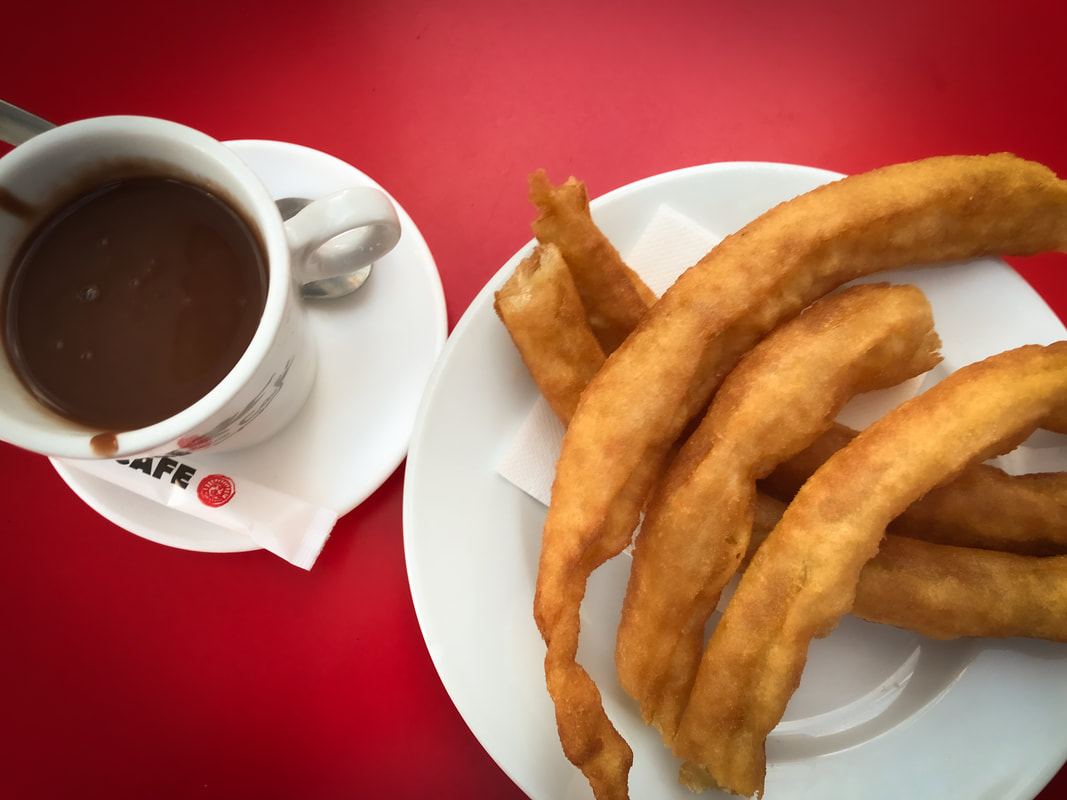
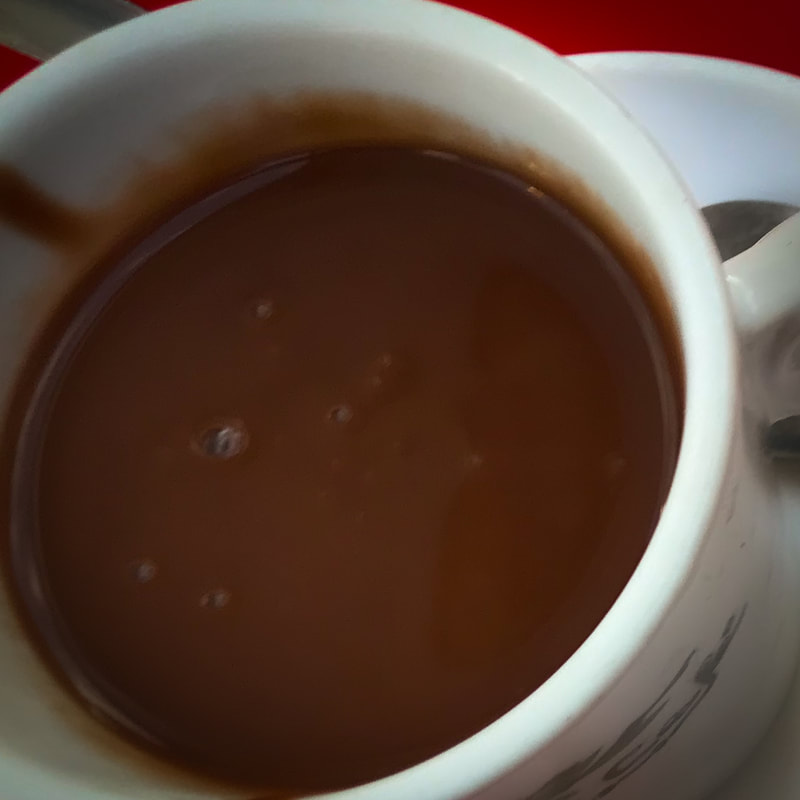
, my long-time reader Vera wrote in to ask why I didn’t mention churros and chocolate, and I had to agree this was a serious oversight on my part. To my brother Mike, a devout chocaholic, this is undeniably Seville’s breakfast of champions. You start with churros — sizzling fried tubes of dough — which you proceed to dunk in hot chocolate as dense as pudding. I know, right? Possibly the most decadent breakfast ever invented and naturally a huge favorite with the Sevillanos. It’s mostly a Sunday indulgence but is occasional used to
reanimarse
(reanimate yourself) en route home from a party at six in the morning or eaten as your
marienda
, the post-siesta snack that’s essentially a third breakfast.
“Rich,” I said, “we have to go out for churros and chocolate. It’s research.”
“I am willing to make the sacrifice,” he said. “For your readers.”
The article
5 Places for the Best Churros in Seville
named
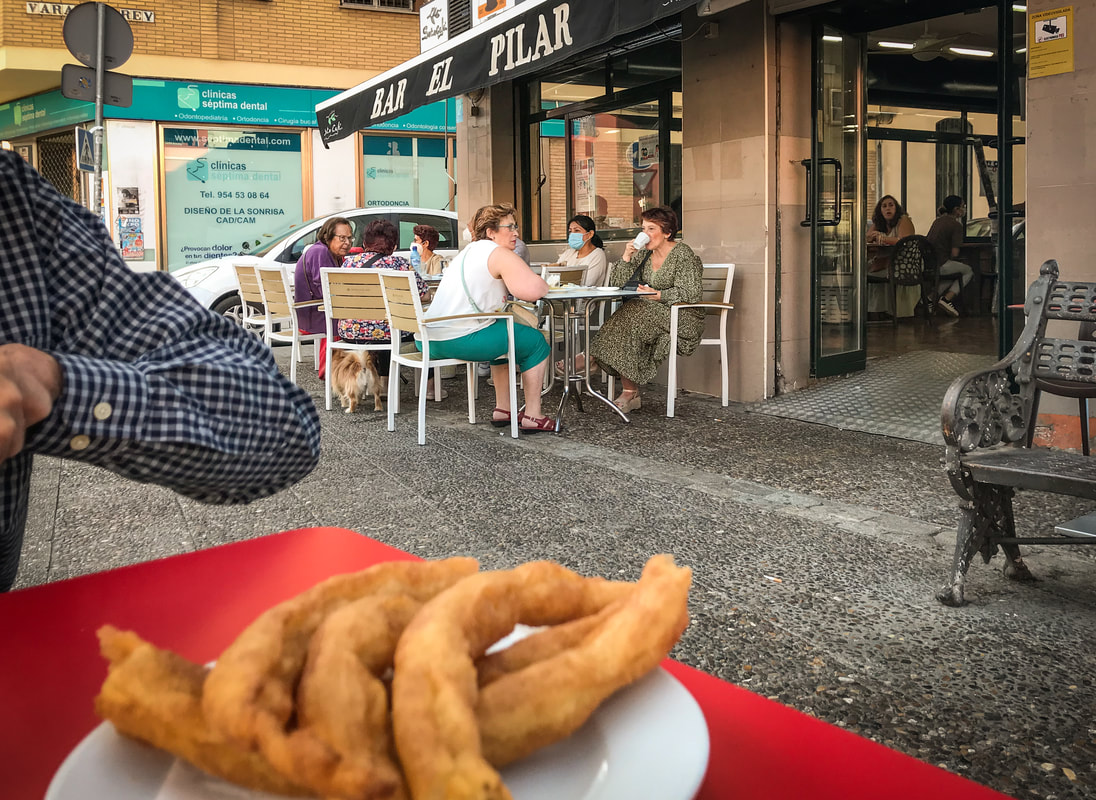
El Pilar
numero uno
, and as this is a favorite of ours, Rich and I headed there directly. Unfortunately we arrived during the second breakfast rush, and every outdoor seat was taken. As we hovered uncertainly on the outer edges of the small crowd, an older gentleman rose slowly to his feet and said, “Please, take my table. I insist.” He picked up his half-finished coffee and headed indoors, our fulsome thanks ringing in his ears.
The churros and chocolate were first rate: hot, dense, and fortifying to the physique. The bill came to 5.60€ ($6.47), and when Rich handed the waitress a 5 euro bill and a euro’s worth of change, she counted the money and exclaimed, “Sir, you have overpaid me!” And tried to give back the 40 centimos. You have to love a place with that kind of attitude.
For Sevillanos and others who love the city,
desayuno
is one of life’s great treats and once a day simply isn’t enough. Most of us have a regular café where we no longer have to order our second breakfast; the
camarero
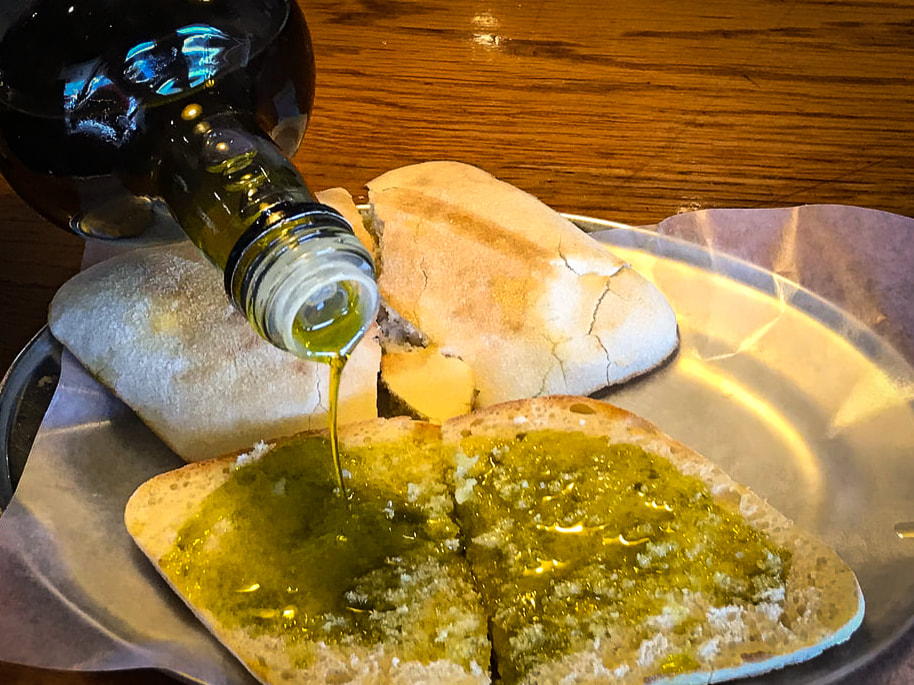
automatically places our favorite configuration of coffee and toast on the bar, perhaps nudging a bottle of olive oil in our direction so we can drench our toast even further. I can only imagine how John Harvey Kellogg is turning in his grave at the very idea of all that pleasure packed into a morning meal. But hey, it works for me.
YOU MIGHT ALSO ENJOY
YES, COFFEE CAN HELP YOU LIVE LONGER
NO, OLIVE OIL DOESN’T MAKE YOU FAT
HOW COCOLATE BOOSTS BRAIN POWER
As I resettle in Seville, my favorite city on the planet, I’ll keep you posted on how the pandemic has reshaped the landscape. But don’t worry: not even Covid could dampen the city’s appetite for good food.
CLICK HERE TO RECEIVE FREE UPDATES
on Seville, travel to Europe, and where to find good eats and survival comforts.
Leave a Reply