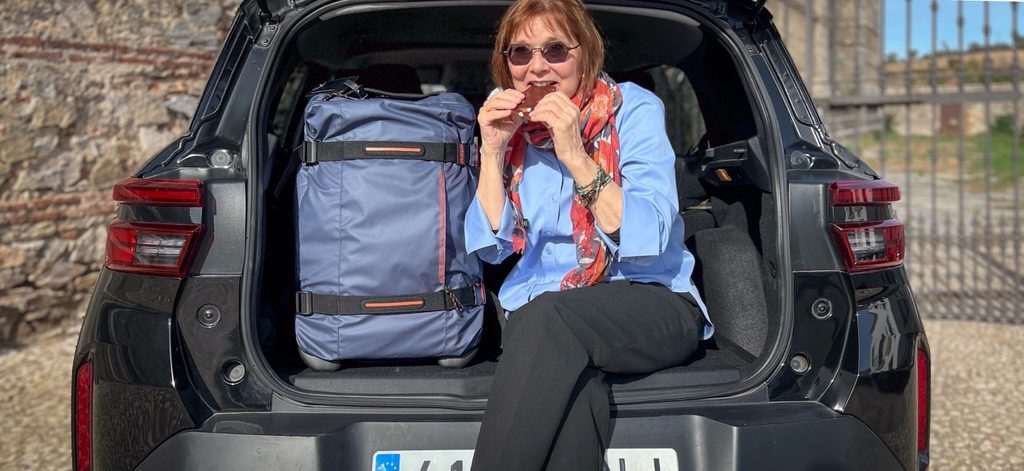
Rich’s family swears by the four basic food groups: milk chocolate, dark chocolate, white chocolate, and chocolate truffles. At age 81, his oldest sister showed up for a siblings’ road trip with an entire suitcase filled with chocolate candy — and none of the others thought that was odd. Every McCann I’ve ever met is staunchly among what humorist Sandra Boynton calls “the select millions who like chocolate in all its infinite variety, using ‘like’ as in ‘I like to breathe.’”
So it was hardly surprising that last week I could barely complete the remark, “Did you know there’s a chocolate factory in Aracena?” before Rich exclaimed, “I’m in! Let’s go.”
Aracena lies 56 miles northwest of Seville, a picturesque town that’s home to 8500 souls and one of the world’s most spectacular caves, the Gruta de las Maravillas (Grotto of Marvels).
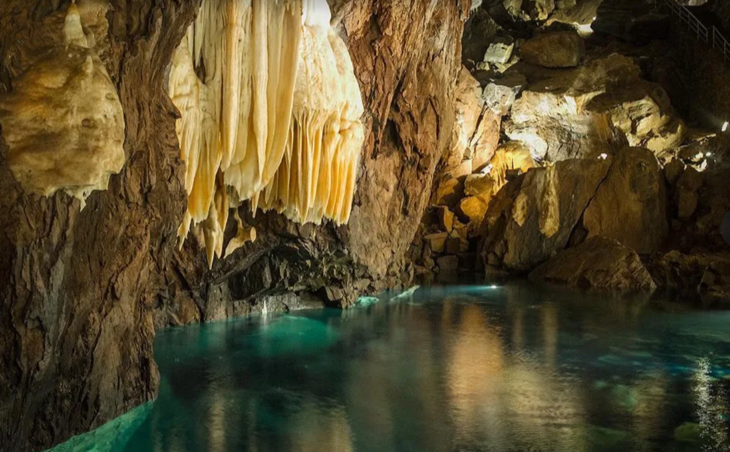
I know, right? Wow.
Rich and I visited some years ago, rubbernecking for an hour along three quarters of a mile of jaw-dropping rock formations and cleverly illuminated lakes. As near as archaeologists can tell, the cave complex remained completely undiscovered until 1850-ish, when someone (possibly quarrymen or a shepherd) stumbled upon it. Since then, it’s served as a backdrop in movies including Journey to the Center of the Earth and Tarzan in King Soloman’s Mine, but its main role is attracting 150,000 visitors a year to this once-sleepy medieval mountain town.
The Gruta de las Maravillas easily eclipses all other local points of interest, even the thirteenth-century castle and the adjacent church, which is rumored to be a secret hideout of the Knights Templar to this day. It’s no wonder visitors rarely have time for the more modest local entertainments: the ham museum, a goat farm, one famous architect’s reinvention of a public laundry, or our destination, known as (and I am not making this up) Richard Chocolat Factory.
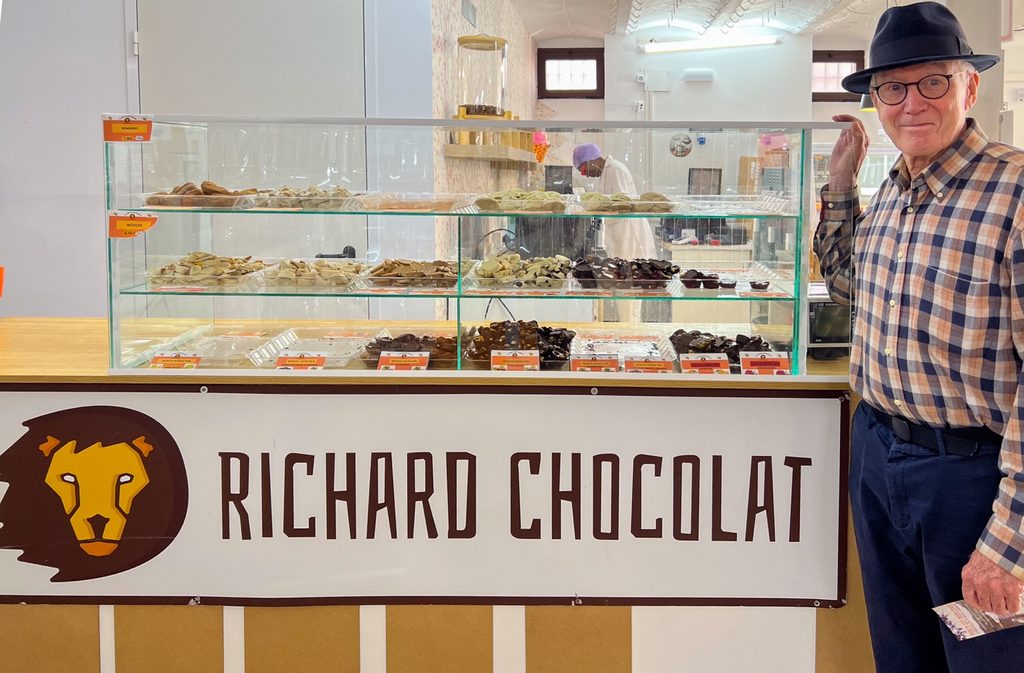
According to Google, the factory’s owners are always willing to drop everything and give personal, passionate tours explaining their craft chocolate process. We, however, managed to catch them on an off day, when owner/chef Ester Richardson was busy, her partner Jose Léon was out, and the staff member on duty proved to be a taciturn woman who impassively handed out sample after sample without commentary.
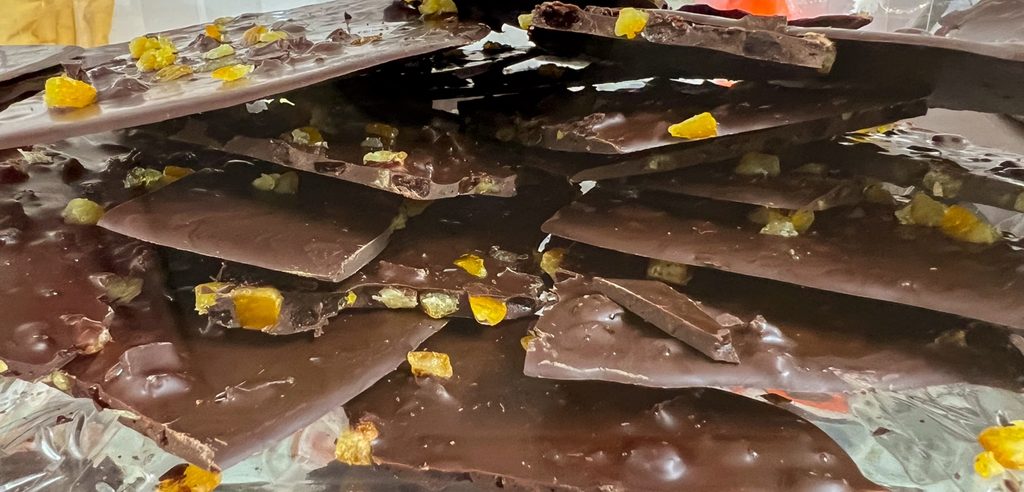
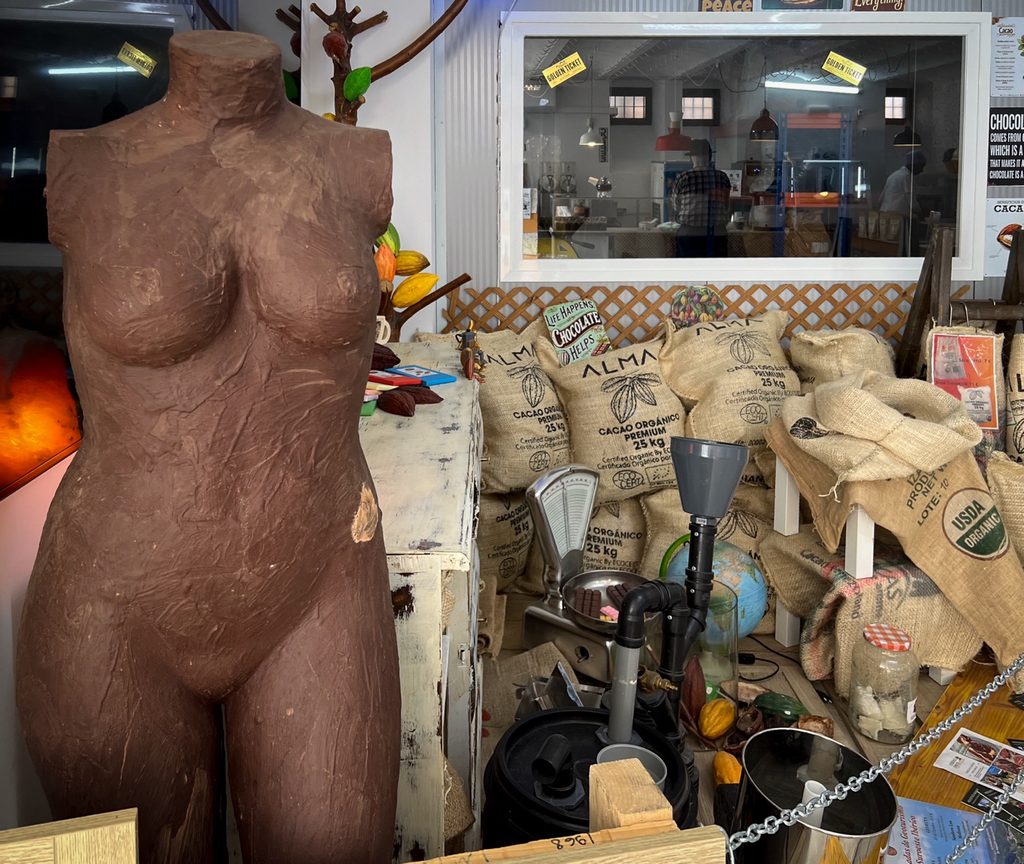
None of that mattered once we tasted the samples. The chocolate was gorgeous: rich, dense, and studded with almonds, hazelnuts, orange zest, ginger, or cranberry bits, with cacao percentages from 45% to 100%. After prolonged, diligent taste testing — during which Rich selflessly pitched in to help — I settled on the 75% cacao with ginger and orange zest as the most satisfying. But I didn’t want to play favorites, so I purchased an assortment and — with my brain buzzing on an intense chocolate high — I stepped outside into the bright sunlight of Plaza de San Pedro.
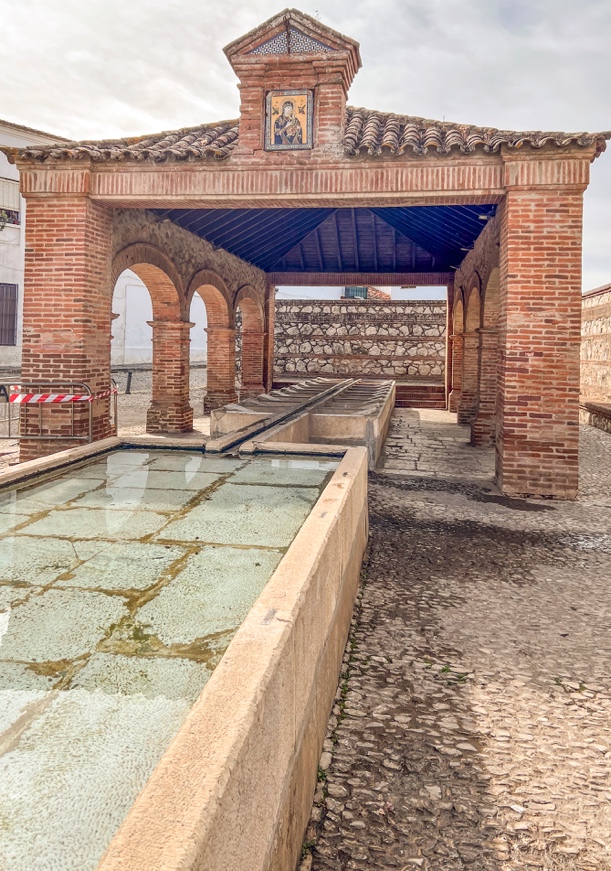
The plaza is the heart of the town, where visitors wait their turn to tour the Gruta de las Maravillas, local kids play futból, friends gather in sidewalk cafés for gossip and espresso, and, in the old days, women did the family washing in the natural spring water gushing out of the caves.
For 600 years women scrubbed their linens on rough stones, but in the 1920s local aristocrats decided their town needed something grander that would dazzle the eye, so they hired the hottest architect of the day, Aníbal González (known for Seville’s Plaza de España and other landmarks). He created the Lavadero Público Fuente del Concejo, the awkwardly named Council Fountain Public Laundry.
For half a century, the hard-working women of Aracena enjoyed such luxuries as built-in cement washboards and shelter from the sun and rain. By the 1970s they were thanking their lucky stars for the invention of modern washing machines. I stood there counting my blessings; there’s a lot to be said for modern conveniences.
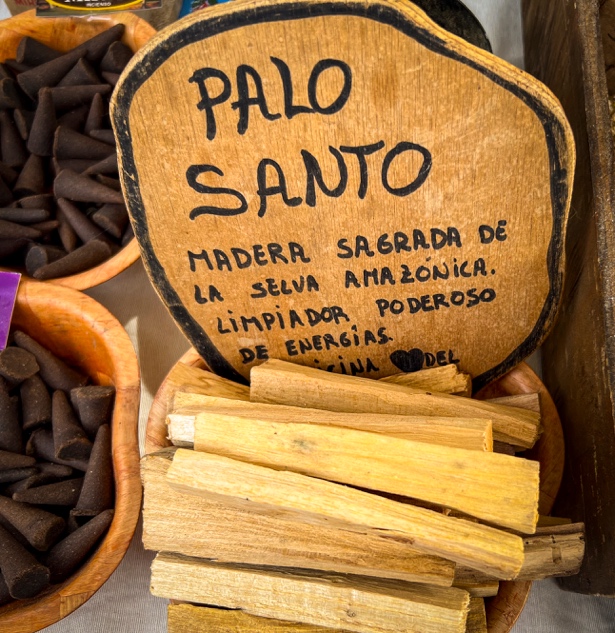
Plaza de San Pedro happened to be hosting a small artisan fair, so Rich and I wandered around gazing at hand-made pottery, glittery gold jewelry, and other small indulgences. At the stall carrying herbal remedies, I discovered some Palo Santo, which has been popular folk treatment for generations in Andalucía.
The display called it, “Sacred wood from the Amazon rainforest, powerful cleanser of energies.” OK, technically the Palo Santo (Holy Stick) tree only grows in tropical dry forests, but why quibble? The real question is whether lighting one of the sticks on fire and inhaling the aromatic smoke can alter reality, or at least your perception of it.
I’m guessing no. But then, I’ve been wrong before. Maybe these holy sticks really can dispel negative energy, purify the atmosphere, and invite good vibes. Yes, I bought a piece, and when I try it, I’ll let you know the results. If any.
We spent the night with friends just outside of town, sitting by a roaring fire, sipping cava, and swapping stories about the unpredictability of the universe. In the morning Rich and I decided to leave the pig museum and goat farm for another day and head back to Seville. We congratulated ourselves that our One-Tank Trips project (short road trips by rental car rather than our usual train travel) was off to a good start.
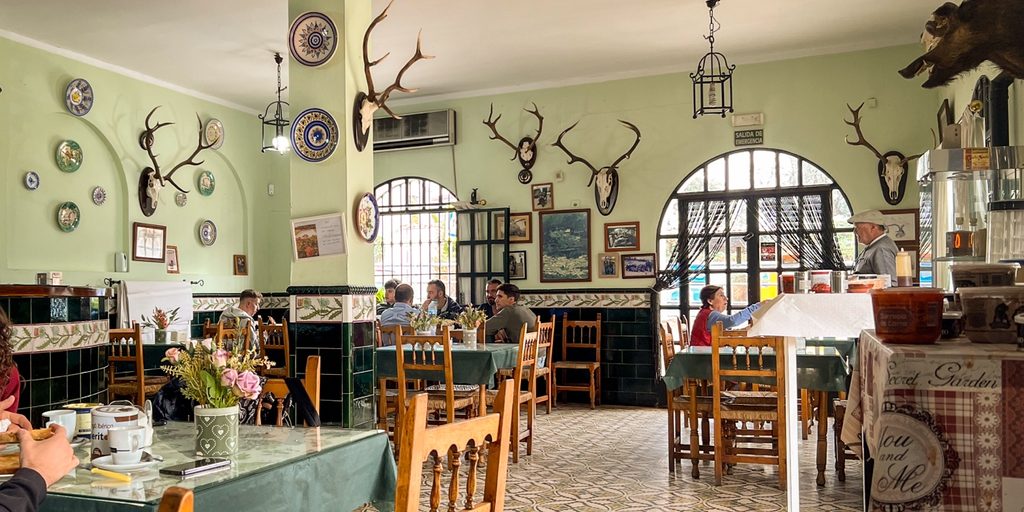
One of the more delightful aspects of automobile travel is the ability to make impulse stops. On the way to Aracena we’d passed an unpretentious ventorrillo (roadhouse) where a group of motorcyclists were taking their ease on the terrace. “Bikers always know the best places to eat,” I’d remarked as we zipped past, and on the return journey, we found the place again and stopped in.
The ventorrillo’s terrace was now crowded with neighbors enjoying a late Sunday breakfast. The air was filled with sunlight and bulla, as the Spanish call the hubbub made by groups of people enjoying themselves in a slightly boisterous but agreeable manner.
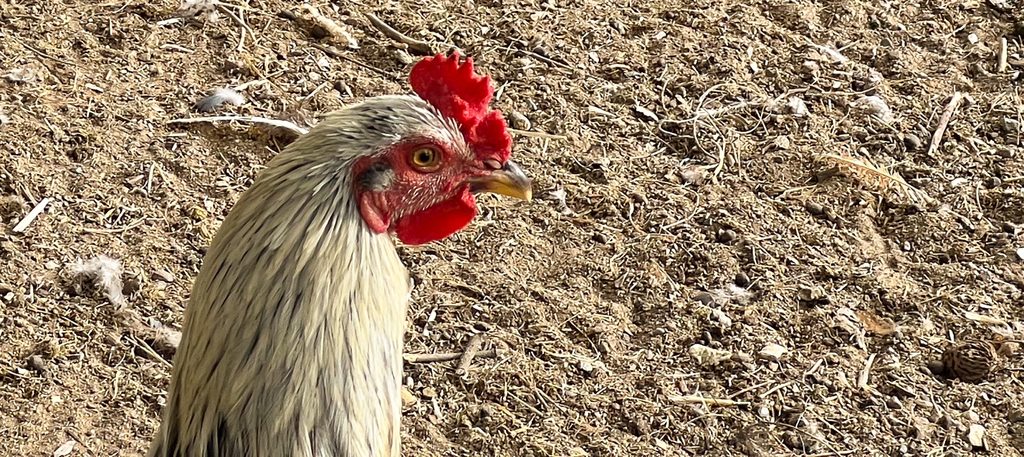
We parked next to the barnyard and paused to make the acquaintance of the friendly goats and assorted curious chickens. Heading inside, we found a spacious dining room and a small area selling local honey, homemade olive oil, fresh vegetables, and eggs produced by our new friends outside.
A sign on the wall offered their own chickens, cleaned and ready to cook. For one horrible moment I imagined the host striding out into the barnyard to sacrifice a hen for us.
“Don’t order the chicken,” I said to Rich. “Not now that we know some of them socially.”
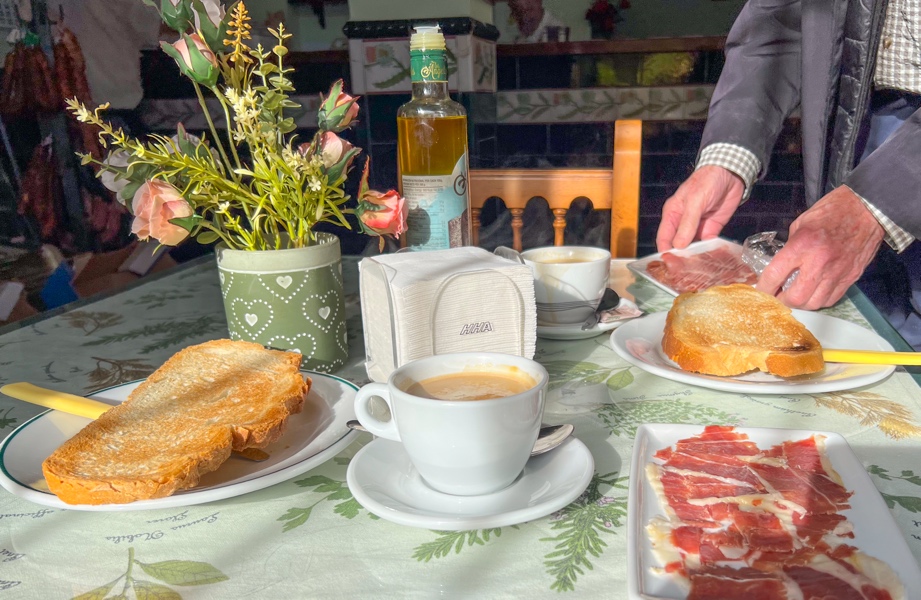
Luckily, since the Spanish national breakfast is toast with slivers of ham, there were no adorable pigs outside in the pen to inhibit my enjoyment of the meal.
As Rich drove us back to Seville, I felt refreshed in mind, body, and soul. After just a short time in the countryside, I felt I was embodying the words of Henry David Thoreau: “Live in each season as it passes; breathe the air, drink the drink, taste the fruit, and resign yourself to the influence of the earth.” Add in “munch on some slabs of glorious chocolate,” Henry, and I’m with you all the way.


Learn more about our One-Tank Trips in my post Great Escapes: Quick, Easy, Affordable Little Getaways. Don’t miss a single adventure: subscribe here.
Leave a Reply